- H-FARM AI's Newsletter
- Posts
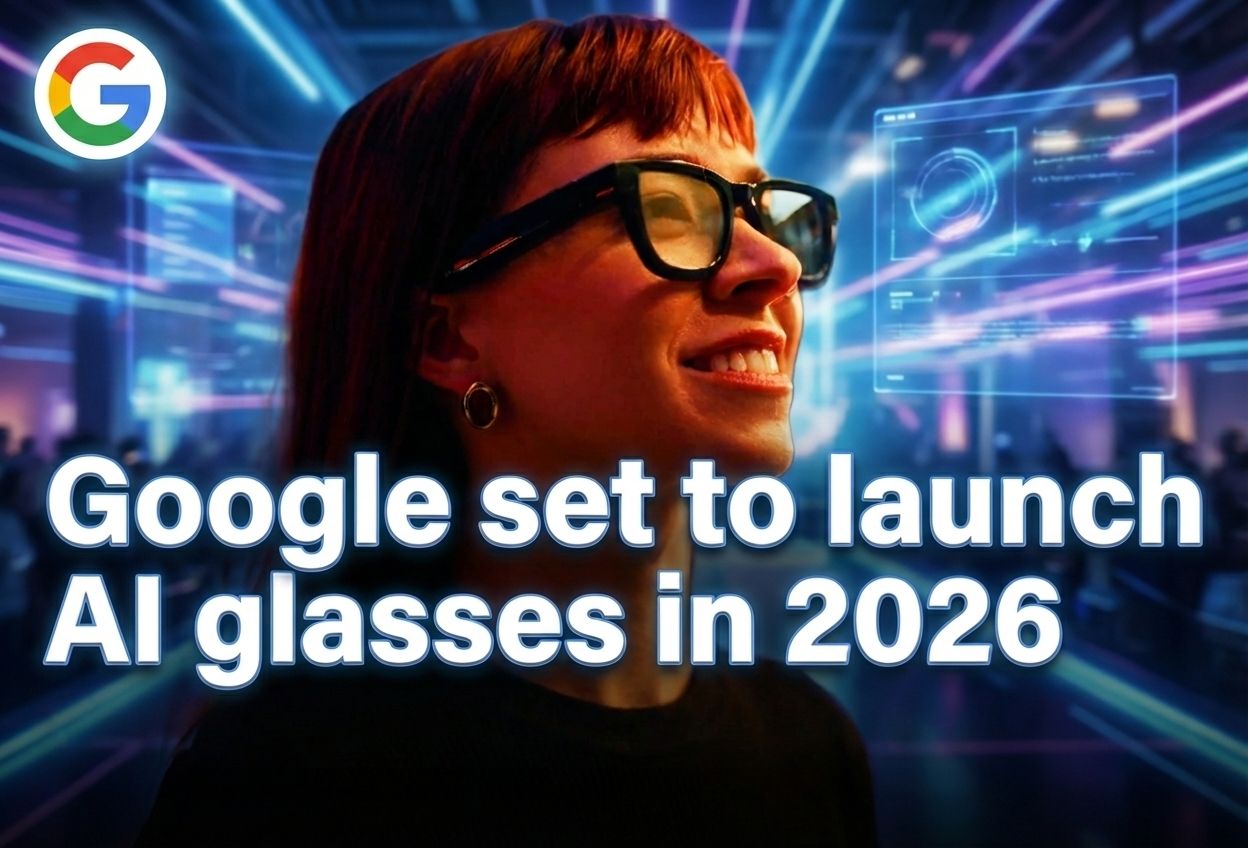
- Google set to launch AI glasses in 2026
Google set to launch AI glasses in 2026
PLUS: OpenAI accelerates GPT-5.2 timeline & Anthropic brings Claude to Slack. OpenAI's enterprise AI study shows simple approaches dominate, large-scale AI agent survey published.

In today’s agenda: 2️⃣ OpenAI moves up GPT-5.2 release to this week after Google Gemini 3 Pro gains 3️⃣ Anthropic integrates Claude Code directly into Slack for team development |
|
MAIN AI UPDATES / 9th December 2025
🥽 Google set to launch AI glasses in 2026 🥽
Two distinct models targeting different use cases
Google is planning to release two distinct types of AI-powered glasses in 2026. The first pair will let users interact with Gemini through built-in speakers, microphones, and cameras, while the second pair adds an in-lens display showing real-time data like translation or navigation information. The announcement provides the clearest roadmap yet for Google's AR ambitions in the consumer market, marking a significant step in wearable AI technology adoption.
🤖 OpenAI accelerates GPT-5.2 timeline 🤖
Accelerated timeline to counter Google's Gemini 3 Pro
OpenAI is reportedly planning to launch GPT-5.2 this week in direct response to Google's Gemini 3 Pro performance gains. The release was originally scheduled for late December, but the company accelerated the timeline after issuing an internal "code red" last week. According to sources, the move aims to close the growing performance gap with Google's latest model and maintain OpenAI's competitive edge in the AI race. The rushed timeline signals intensifying competition between AI leaders.
💻 Anthropic brings Claude to Slack 💻
Full coding sessions embedded in team collaboration platform
Anthropic is integrating Claude Code into Slack, allowing developers to run complete coding sessions directly from conversation threads. The integration includes workflow automation, repository context detection, and real-time progress updates. This represents a significant shift from traditional IDE-based development to AI-assisted coding within team communication platforms. The move embeds AI development tools deeper into collaborative workflows rather than standalone coding environments.
INTERESTING TO KNOW
📊 OpenAI's enterprise AI study shows simple approaches dominate 📊
OpenAI's new enterprise AI report reveals that 68% of production AI agents execute at most 10 steps before requiring human intervention, while 70% rely on prompting off-the-shelf models instead of weight tuning. The study shows that reliability remains the top development challenge, with organizations primarily depending on human evaluation rather than automated testing. Simple yet effective methods are already enabling agents to deliver measurable impact across diverse industries.
🔬 Large-scale AI agent survey published 🔬
Berkeley researchers published the first comprehensive study of AI agents in production, surveying 306 practitioners and conducting 20 in-depth case studies across 26 domains. The research documents current deployment patterns and challenges, finding that organizations prioritize controllable approaches over complex architectures. The study bridges the gap between research and deployment by providing researchers visibility into real-world production challenges.

📩 Have questions or feedback? Just reply to this email , we’d love to hear from you!
🔗 Stay connected: